Sarah Chen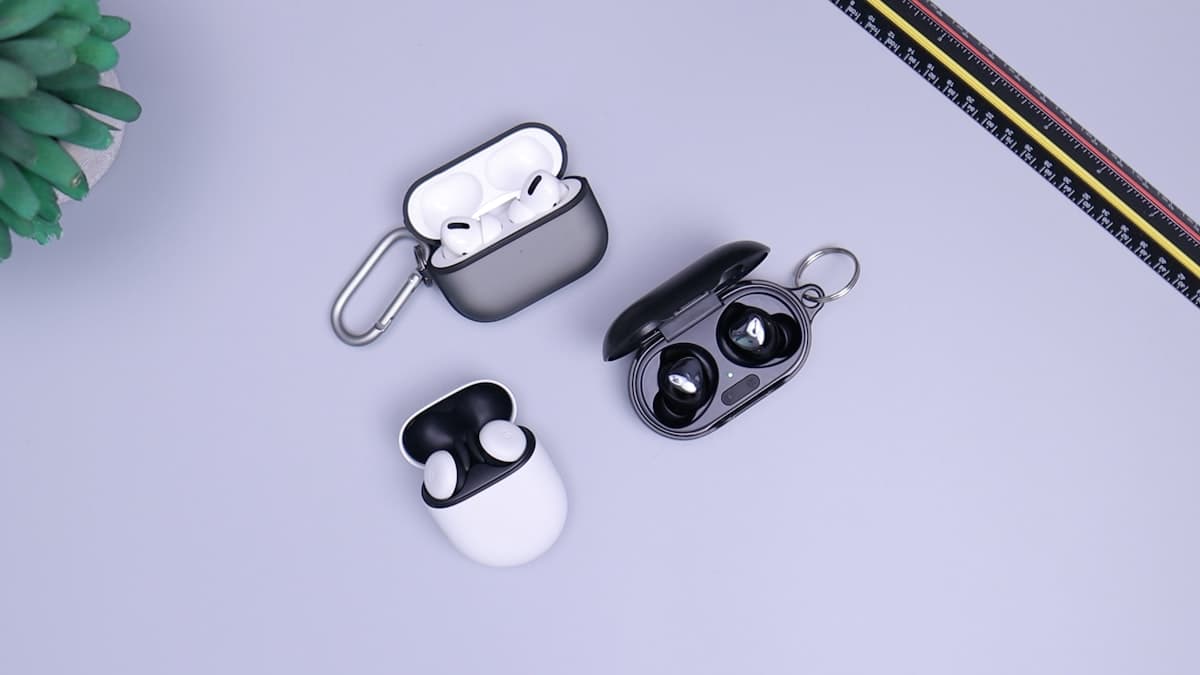
OpenAI Wants You to Wear ChatGPT in Your Ears
Let me break this down: OpenAI is no longer just a software company. In September 2026, they're launching Sweetpea, AI-powered earbuds designed to compete directly with Apple's AirPods.
And they're not doing it alone. They've hired Jony Ive, the legendary designer who created the iPhone, iPod, and the original AirPods. The bet is so serious that OpenAI paid $6.5 billion to acquire his company, io Products.
The stated goal is to sell between 40 and 50 million units in the first year. For context, Apple sells around 60-70 million AirPods annually. OpenAI isn't here to play: they're here to compete head-to-head.
What Exactly Are the Sweetpea?
Think of it like this: imagine your earbuds don't just play music, but have ChatGPT always ready to respond. No need to pull out your phone. No "Hey Siri" required. You just talk and it answers.
The trick is in the design: Sweetpea doesn't go inside your ear canal like AirPods. Instead, they rest behind the ear in an "eggstone-shaped" case. This allows for a larger battery, better thermal management, and advanced sensors that would be impossible in a traditional format.
Confirmed Specifications
| Feature | Detail |
|---|---|
| Main chip | Samsung Exynos 2600 (2nm) |
| AI processing | On-device + cloud |
| Activation | No wake-up phrase |
| Connectivity | Bluetooth 5.4, iOS and Android |
| Estimated price | $200-300 USD |
| Launch | September 2026 |
What most guides won't tell you is that they include electromyography (EMG) sensors on the mastoid bone. This allows detecting jaw movements to "speak" with the AI without vocalizing. You could ask ChatGPT questions in a meeting without anyone noticing.
Why Jony Ive Makes All the Difference
When we talk about consumer product design, Jony Ive is practically a god. He was responsible for:
- iPod (2001) - Revolutionized portable music
- iPhone (2007) - Redefined smartphones
- iPad (2010) - Created the tablet category
- AirPods (2016) - Dominated wireless earbuds
Now he works for OpenAI. The io Products acquisition wasn't just about talent: it was about vision. In the joint letter Sam Altman and Jony Ive published, they described their goal as creating "a family of devices that will enable people to use AI to create all sorts of wonderful things."
The design philosophy is clear: reduce screen addiction. Sweetpea is audio-first, screenless, with natural voice interaction. Altman has said he wants to create "a device that knows everything you've thought, read, or said."
Sweetpea vs AirPods Pro: The Inevitable Comparison
The most anticipated hardware showdown of the year. Here's how they compare:
| Aspect | OpenAI Sweetpea | Apple AirPods Pro 2 |
|---|---|---|
| Design | Behind the ear | Inside ear canal |
| Integrated AI | Native ChatGPT, always-on | Siri (limited) |
| Activation | No wake phrase | "Hey Siri" |
| Local processing | On-device AI inference | Limited |
| Silent speech | Yes (EMG sensors) | No |
| Chip | 2nm smartphone-class | H2 audio-optimized |
| Price | ~$200-300 | $249 |
| Focus | Constant AI assistant | Premium audio |
The fundamental difference: AirPods are earbuds with a basic assistant. Sweetpea is an AI computer that happens to be earbuds.
The 2nm Chip That Makes It Possible
To fit ChatGPT into earbuds, you need serious power. OpenAI chose the Samsung Exynos 2600, the world's first 2-nanometer mobile chip.
The numbers are impressive:
- 39% better performance vs previous generation
- 113% better AI performance (dedicated NPU)
- Heat Path Block technology for thermal dissipation
This allows voice recognition and basic AI inference to work without internet connection. Complex queries still require connectivity, but you can ask simple questions even in airplane mode.
Foxconn Manufactures, Vietnam Produces
OpenAI switched manufacturers mid-development. Originally, Luxshare (the current AirPods manufacturer) was going to produce Sweetpea. But in January 2026, the switch to Foxconn was confirmed, with production in Vietnam.
Why does this matter? Foxconn lost the AirPods contract to Luxshare years ago. Now they see OpenAI as an opportunity to regain ground in the audio market. This means they'll put all their resources into making the launch flawless.
The Legitimate Concerns
It's not all excitement. There are valid criticisms OpenAI will need to address:
1. Privacy (The Elephant in the Room)
Always-listening AI earbuds constantly send data to OpenAI servers. How much does it listen to? What does it store? Who has access?
OpenAI hasn't detailed their privacy policy for Sweetpea. Given that ChatGPT already faces lawsuits for training on user data, this will be crucial.
2. Battery Life
Constantly processing AI consumes a lot of energy. The behind-the-ear design helps (more room for battery), but it remains to be seen if battery life will be competitive with AirPods Pro (6 hours of active use).
3. Hardware Pricing
The Bill of Materials (component cost) for Sweetpea approaches that of a smartphone due to the 2nm chip and advanced sensors. Keeping the price at $200-300 while maintaining healthy margins will be challenging.
4. Fierce Competition
After OpenAI's announcement, Apple reportedly accelerated development of AirPods with infrared cameras, an AI wearable pin, and smart glasses. Cupertino's response won't be long in coming.
OpenAI's Complete Hardware Roadmap
Sweetpea is just the beginning. OpenAI has confirmed at least 5 devices in development:
- Sweetpea (earbuds) - September 2026
- Home device - Possibly a smart speaker
- Pen - AI-powered digital voice recorder
- Smart glasses - Though Altman denies it's traditional "eyewear"
- Wearable pin - Despite Ive's criticisms of the Humane AI Pin
The internal timeline aims to have all 5 devices ready with Foxconn by Q4 2028.
Why This Matters for the Future of AI
OpenAI has 800 million weekly users on ChatGPT. Until now, everyone accesses it via web or app. Sweetpea represents the leap from "you open an app when you need it" to "AI is always with you."
It's the same leap Apple made with the iPhone: from the desktop computer to your pocket. Now OpenAI wants to take it from the pocket to the ear.
If it works, others will follow. Google is already integrating Gemini everywhere. Meta has its Ray-Ban AI glasses. Microsoft has invested $13 billion in OpenAI. The race to be "the AI you always carry" has officially begun.
What to Expect in the Coming Months
- February 2026: Possible unveiling at an OpenAI event
- March-May 2026: Beta testing with selected users
- June 2026: Official price and availability announcement
- September 2026: Commercial launch
Chris Lehane, OpenAI's Chief Global Affairs Officer, confirmed at the Davos Forum that they're "on track" for the second half of 2026. Everything indicates the schedule holds.
Conclusion: The First Step Toward Ubiquitous AI
OpenAI Sweetpea isn't just a product: it's a statement of intent. Sam Altman wants ChatGPT to be as ubiquitous as the smartphone, and earbuds are the logical first step.
Will it work? Too early to tell. But with Jony Ive designing, $6.5 billion invested, Foxconn manufacturing, and 800 million potential users, OpenAI has all the pieces to try.
What most guides won't tell you is that this isn't just about earbuds. It's about who will be the company that defines how we interact with AI for the next 10 years. Apple, Google, and Microsoft know it. And now OpenAI is playing in that league too.